Author: fashionsprint66@gmail.com

  • What Are the Most Popular World News Sites? Your Ultimate 2026 Guide to Global Coverage That Actually Matters

    What Are the Most Popular World News Sites? Your Ultimate 2026 Guide to Global Coverage That Actually Matters

    I still remember the knot in my stomach during the early days of a major international crisis a few years back. Scrolling through endless feeds, I realized most “news” was just noise. That’s when I started hunting for sites that delivered real world stories—fast, fair, and without the spin. If you’re tired of the same echo chambers and want sources that actually shape how we understand our planet, you’re in the right place. This guide breaks down the most popular world news sites in 2026, based on real traffic data, trust metrics, and what keeps millions coming back day after day.

    Understanding Popularity in the World News Arena

    Popularity isn’t just clicks—it’s about reach, trust, and how sites cut through the chaos of social media and AI-generated slop. In 2026, global visits to top English-language news sites hover in the hundreds of millions monthly, driven by breaking events, mobile-first habits, and a hunger for context beyond headlines. What separates the giants from the pack? A mix of legacy authority, digital innovation, and that rare ability to make faraway events feel personal.

    The Methodology Behind Our Ranking of Top World News Sites

    I pulled from SimilarWeb traffic numbers, Press Gazette rankings, Ahrefs organic search data, and the Reuters Institute Digital News Report for trust signals. We focused on sites with strong international/world coverage, not just national or aggregator portals. Traffic, year-over-year growth, and real-user sentiment all played a part—no paid lists or guesswork here. The result? A clear picture of who actually dominates when the world needs answers.

    Top Contenders: The Most Popular World News Sites Right Now

    BBC News sits at or near the top of every major ranking for a reason. With nearly a billion global visits some months, it blends British public-service roots with unmatched global bureaus. Readers trust it because it feels steady—like a reliable friend who’s traveled everywhere and tells it straight.

    BBC News: Still the World’s Go-To for Balanced International Reporting

    The BBC’s editorial independence, funded by the British license fee rather than ads or billionaires, lets it cover everything from climate summits in Glasgow to elections in Pakistan without obvious bias. Its app and website load lightning-fast on mobile, which matters when you’re in Lahore checking updates during a blackout. I’ve relied on it during late-night shifts covering breaking stories, and it rarely lets me down.

    The New York Times: Premium Depth That Keeps Readers Coming Back

    The New York Times has edged out the BBC in some recent traffic snapshots thanks to its paywall strategy and killer investigative pieces. Its international section goes deep on everything from trade wars to human rights, with gorgeous visuals and newsletters that feel like a morning briefing from a smart colleague. Sure, it’s U.S.-centric at times, but the global lens is sharper than most.

    CNN: Breaking News Speed Meets Global Reach

    CNN built its empire on 24/7 cable but its digital site delivers instant alerts on world events. From live blogs during conflicts to explainer videos that make complex diplomacy click, it’s the site millions turn to when something big happens right now. The downside? Occasional sensational headlines that can feel a tad dramatic.

    Reuters: The Wire Service Everyone Quietly Relies On

    Reuters isn’t flashy, and that’s exactly why it ranks so high in credibility. As a global wire service, its fact-packed stories appear everywhere else first. No opinion columns, just clean, sourced reporting from 200+ locations. Journalists and regular readers alike bookmark it because it’s the closest thing to pure signal in a noisy world.

    Al Jazeera: The Voice That Changed How the Global South Sees Itself

    Al Jazeera’s traffic exploded nearly 400% year-over-year in early 2026 amid major Middle East developments. Its English-language site offers fearless coverage from regions Western outlets often gloss over. The documentaries and live reports feel raw and on-the-ground—exactly what you want when mainstream narratives feel incomplete.

    The Guardian: Independent Journalism With a Progressive Edge

    Funded by reader contributions rather than ads or owners, The Guardian punches above its weight in world news. Its climate coverage and human-rights reporting stand out, and the site’s clean design makes long reads actually enjoyable. It’s not afraid to call out power, which wins loyal fans worldwide.

    Associated Press (AP News): The Invisible Backbone of Global News

    AP stories show up on thousands of sites because they’re fast, accurate, and neutral. The cooperative model—hundreds of newsrooms sharing resources—means unmatched breadth. If you want the first factual wire on any international story, AP is usually there before the rest.

    Comparing the Heavyweights: Traffic, Trust, and Real-World Strengths

    Here’s a quick side-by-side look at the leaders based on latest available data:

    SiteApprox. Monthly Global Visits (millions)Key StrengthTrust Score (Reuters Institute vibe)Best For
    BBC News900+Global bureaus & balanceVery HighBalanced daily briefings
    New York Times650+Investigative depthHighIn-depth features
    CNN350+Breaking speedMedium-HighLive events
    Reuters110+Fact-only wireHighestQuick, unbiased facts
    Al Jazeera210+ (surge)Global South perspectiveHigh in non-Western marketsAlternative viewpoints

    Numbers fluctuate monthly, but the pattern holds: legacy brands with strong digital play win big.

    Pros and Cons of Sticking to These Popular Sites

    Every source has trade-offs. The big ones give you reach and resources but can sometimes feel corporate or agenda-driven. Smaller independents offer freshness yet lack the verification muscle. Mixing two or three from this list usually covers the gaps nicely—no single site owns the full truth.

    Wire Services vs. Traditional Outlets: Why the Difference Matters

    Wire services like Reuters and AP feed the rest of the media ecosystem. They focus on facts without commentary, which is why they score highest on trust surveys. Traditional outlets add analysis, visuals, and opinion—which is great for understanding but requires cross-checking.

    How Mobile and Apps Changed the Game for World News

    In 2026, over 60% of news consumption happens on phones. The top sites nailed push notifications, dark mode, and offline reading. BBC and Al Jazeera apps feel native and respectful of your time—something that keeps users loyal even when Wi-Fi is spotty in places like Punjab.

    The Trust Factor: What the Reuters Institute Tells Us

    The 2025 Digital News Report (data still relevant in early 2026) shows public broadcasters and wire services top trust lists across markets. People still turn to BBC or Reuters first when they suspect misinformation. In a world full of deepfakes, that reputation is gold.

    Aggregators Like Yahoo and MSN: Popular, But Not Pure News

    Yahoo and MSN rank high in raw visits because they bundle stories from everywhere. They’re convenient one-stop shops, but you’re reading someone else’s reporting. Great for scanning, less ideal if you want original journalism.

    Regional Giants That Punch Globally

    Sites like Globo (Brazil) and Times of India show how local powerhouses expand internationally. Their English sections bring fresh angles on emerging markets—worth adding to your rotation if you care about the Global South.

    How to Choose the Right World News Site for Your Needs

    Ask yourself: Do I want speed (CNN), depth (NYT), balance (BBC), or underrepresented voices (Al Jazeera)? Test a few for a week. Bookmark the ones that feel honest and add value without the rage bait. Your perfect mix will evolve, and that’s okay.

    A Personal Story That Changed How I Consume News

    Back in 2022, during a tense border situation, I watched three sites report the same event three different ways. Reuters gave bare facts, BBC added context, and Al Jazeera showed the human cost on the ground. That night I realized no single source has the full picture—diversity in your news diet is non-negotiable.

    Light Moments in a Heavy World

    Let’s be honest: trying to stay informed without the right sites is like attempting to follow a cricket match by only reading the score on your phone. These outlets turn the chaos into something you can actually follow—and occasionally even laugh at the absurdity of geopolitics.

    People Also Ask About Popular World News Sites

    What is the most popular news website in the world?
    BBC News and The New York Times trade the top spot depending on the month, with BBC often leading English-language global visits.

    Which news sites are most trusted for world events?
    Reuters, BBC, and AP consistently rank highest in independent surveys for accuracy and low bias.

    Are free world news sites as good as paid ones?
    Many top sites offer strong free tiers; paid unlocks remove ads and add exclusive reporting, but the core journalism is usually accessible.

    How do I avoid biased world news?
    Cross-reference at least two outlets from different regions or ownership models. Wire services are your safest neutral starting point.

    What makes a news site truly global?
    Diverse bureaus, multilingual options, and coverage that doesn’t center only on the U.S. or Europe.

    FAQ: Your Burning Questions Answered

    Why do some sites dominate traffic even if trust varies?
    Speed, strong SEO, and habit win eyeballs. Trust builds over time but doesn’t always equal immediate clicks.

    Should I pay for news in 2026?
    If you read deeply, yes. Subscriptions support independent reporting and cut down on clickbait.

    Can one site replace all others?
    No. The smartest readers rotate between three or four to build a fuller picture.

    How often do these rankings change?
    Monthly traffic shifts with big events, but the same names stay at the top year after year.

    What’s the future of world news sites?
    More video, AI summaries, and reader-funded models—yet the core need for trusted human reporting remains.

    Staying informed about our interconnected world doesn’t have to feel overwhelming. The sites we’ve covered here have earned their popularity through decades of showing up, getting it right more often than not, and adapting without losing their souls. Pick two or three, make them part of your daily routine, and you’ll feel the difference. The world is messy, but these outlets help make sense of it—one reliable story at a time. Turn off the endless scroll and start reading smarter today. Your future self (and your peace of mind) will thank you.

  • Celebrating Fact-Based Journalism Globally

    Celebrating Fact-Based Journalism Globally

    In a digital age where headlines scream for attention and algorithms push whatever keeps eyes glued, fact-based journalism stands out like a lighthouse in a storm. It’s not flashy or partisan—it’s the quiet commitment to truth that rebuilds trust one verified detail at a time. Around the world, from bustling newsrooms in New York to community radio in rural Africa, journalists and readers alike are pausing to celebrate this vital craft. And in 2026, with misinformation evolving faster than ever thanks to AI, that celebration feels more urgent than a morning coffee.

    The Roots of Fact-Based Journalism: A Brief History

    Fact-based journalism didn’t pop up yesterday—it traces back to the very idea of a free press serving democracy. Think of the 17th-century pamphlets that challenged kings with evidence, or the muckrakers of the early 1900s who exposed corruption through dogged reporting rather than rumor. Over centuries, it evolved into a professional standard: verify first, publish second. Today, it’s the antidote to “fake news” chatter that exploded in the last decade.

    Why the Term “Fact-Based” Even Exists

    The phrase gained traction as a pushback against claims that all journalism was biased or invented. It’s almost redundant—real journalism has always been fact-based—but it reminds us what’s at stake when opinion masquerades as news. In my own experience scrolling late-night feeds, I’ve seen how one unverified post can spark outrage that lingers for days. Fact-based work cuts through that noise with sources, documents, and context.

    What Sets Fact-Based Journalism Apart from Opinion

    At its core, fact-based reporting sticks to verifiable events, data, and quotes without injecting the writer’s spin. Opinion pieces? They thrive on perspective, which is fine when labeled clearly. The beauty is in the separation: facts inform, opinions debate. Readers crave that clarity, especially when polarization makes every story feel like a battlefield.

    Why Fact-Based Journalism Matters More Than Ever in 2026

    With AI churning out convincing deepfakes and social platforms rewarding outrage, fact-based journalism is democracy’s immune system. It holds power accountable, from election claims to corporate scandals. Without it, we drift into fractured realities where shared truth dissolves. I’ve watched friends in Lahore argue over viral videos—facts could have bridged that gap instantly.

    The Human Cost Behind Every Verified Story

    Journalists chasing facts often pay dearly. Reporters in conflict zones dodge threats while sourcing documents that expose war crimes. Their courage isn’t abstract—it saves lives by informing policy and public outrage. One wrong fact, and trust evaporates; one right one, and justice inches forward.

    Global Celebrations: World Press Freedom Day and Its Enduring Power

    Every May 3, the world honors World Press Freedom Day, proclaimed by the UN in 1993 from the Windhoek Declaration. In 2026, the global conference lands in Lusaka, Zambia, under the theme “Shaping a Future at Peace.” It’s a moment to reflect on ethics, mourn fallen journalists, and push back against censorship. UNESCO uses it to spotlight how free, fact-driven media builds peaceful societies.

    How World Press Freedom Day Spotlights Fact-Based Work

    Events worldwide feature panels on verification in the AI era and tributes to reporters who risked everything for evidence. It’s not just speeches—it sparks local workshops where aspiring journalists learn source-checking basics. The emotional pull hits hard when you hear stories of journalists imprisoned for publishing documents governments wanted buried.

    World News Day: A Dedicated Salute to Facts

    September 28 brings World News Day, a global campaign laser-focused on fact-based journalism. Founded by Globe and Mail editor David Walmsley, it unites over 1,000 news brands from 110 countries. The 2025-2026 slogan says it all: “Choose Truth. Choose Facts. Choose Journalism.” Newsrooms share their best verified reporting and remind audiences why original, accurate work matters.

    What Makes World News Day Special

    Unlike fundraisers, it’s a rallying cry. Editors lend platforms to highlight impact stories, while supporters amplify messages on social media. Branko Brkic of Daily Maverick calls it a chance to explain journalists’ relentless pursuit of truth. In a world craving reliable info, this day feels like a global high-five to the profession.

    Iconic Examples: Pulitzer-Winning Stories That Changed the World

    The Pulitzer Prizes have long crowned fact-based excellence. The New York Times staff earned International Reporting honors for unflinching coverage of the October 7 attacks, intelligence failures, and Gaza’s toll—deeply sourced work that pierced propaganda. These aren’t dry reports; they humanize crises through on-the-ground verification.

    The Panama Papers: Global Fact-Based Triumph

    When the International Consortium of Investigative Journalists (ICIJ) released the Panama Papers in 2016, it exposed offshore tax havens used by world leaders. Fact-checkers pored over 11.5 million leaked documents. The result? Resignations, investigations, and billions in recovered taxes. It proved collaboration across borders turns facts into systemic change.

    Local Heroes: Fact-Based Wins Closer to Home

    In smaller nations, investigative teams have toppled corrupt officials using public records and whistleblower tips. One East African outlet’s year-long probe into election funding relied solely on bank statements and interviews—no speculation. Readers felt empowered, turnout rose, and accountability followed. These stories remind us facts travel far when handled with care.

    The Global Fight Against Misinformation: Challenges Journalists Face

    Disinformation campaigns now use AI to flood feeds with synthetic “news.” In 2026, platforms struggle to label deepfakes, while state actors brand legitimate reporting as fake. Journalists face legal threats, physical danger, and economic pressure from declining ad revenue. It’s exhausting, yet they persist because the alternative is chaos.

    AI’s Double-Edged Sword in Fact-Based Reporting

    Tools help verify images faster, but they also create convincing fakes. Fact-checkers now cross-reference metadata and provenance markers. The humor? Some AI slop is so obvious it backfires, but sophisticated versions test even seasoned pros. Training helps, yet nothing replaces human curiosity.

    How Misinformation Erodes Public Trust

    When voters can’t agree on basic events, governance stalls. Studies show repeated exposure to falsehoods makes facts feel optional. Emotional appeal here is real: imagine explaining to your kids why a viral video lied about a disaster. Fact-based journalism rebuilds that shared foundation, one correction at a time.

    Tools and Resources for Fact-Based Reporting

    Modern journalists lean on verified databases and collaborative networks. The International Fact-Checking Network (IFCN) sets global standards, while Duke Reporters’ Lab maps hundreds of fact-checkers worldwide. Google Fact Check Tools let anyone search debunked claims instantly.

    Top Fact-Checking Tools Worth Bookmarking

    • PolitiFact: Rates political claims on a Truth-O-Meter scale with transparent sourcing.
    • FactCheck.org: Nonpartisan breakdowns of U.S. and global statements, ideal for voters.
    • Snopes: Debunks viral rumors, from urban legends to election hoaxes.
    • ICIJ Databases: Offshore leaks and cross-border investigations for deep dives.
    • Google Fact Check Explorer: Searches millions of verified corrections worldwide.

    These aren’t luxuries—they’re lifelines when speed tempts shortcuts.

    Comparison: Traditional vs. Digital Fact-Checking

    Traditional methods rely on boots-on-ground interviews and paper trails. Digital adds satellite imagery, social listening, and AI-assisted pattern detection. Both succeed when layered: human judgment plus tech verification. The pros? Faster global reach. The cons? Over-reliance on unverified online sources can amplify errors.

    Pros and Cons of Embracing Fact-Based Journalism

    Pros

    • Builds long-term audience loyalty through credibility.
    • Strengthens democracy by informing informed debate.
    • Reduces polarization with shared facts.
    • Encourages accountability from leaders and corporations.

    Cons

    • Time-intensive, delaying breaking news in fast cycles.
    • Costly in resources for verification and legal defense.
    • Can feel dry compared to emotional storytelling.
    • Vulnerable to attacks labeling it “biased” anyway.

    The balance tips heavily toward pros when societies value truth over clicks.

    How Individuals Can Support Fact-Based Journalism

    You don’t need a press pass to help. Subscribe to reputable outlets, share verified stories instead of outrage bait, and call out misinformation politely in comments. Attend local press freedom events or donate to IFCN signatories. Small actions compound: one corrected share prevents a dozen misunderstandings.

    Media Literacy: Your Personal Superpower

    Teaching kids to ask “Who benefits from this claim?” turns passive consumers into active guardians of truth. Free resources from UNESCO and Poynter make it accessible. I once sat with a group in a Lahore café dissecting a hoax video—laughter followed when facts emerged, but the lesson stuck.

    People Also Ask About Fact-Based Journalism

    What is fact-based journalism exactly?
    It’s reporting grounded in verifiable evidence—documents, eyewitness accounts, and data—presented without personal slant. Unlike commentary, it lets readers draw conclusions from facts alone.

    Why has fact-based journalism become so important globally?
    Rising disinformation, AI fakes, and polarized politics demand reliable sources. It counters echo chambers and supports informed voting, policy, and peace efforts worldwide.

    How does fact-based journalism differ from investigative reporting?
    Investigative work is a subset that digs deeper into hidden truths, but both prioritize accuracy. Fact-based is the broader umbrella ensuring every story meets verification standards.

    Where can I find reliable fact-based news sources?
    Look for IFCN signatories, AP, Reuters, or Pulitzer winners. Apps and newsletters from trusted outlets deliver daily verified updates straight to your phone.

    Can individuals practice fact-based journalism?
    Absolutely—through citizen reporting, social media verification, or community blogs. Tools like Google Fact Check make it accessible to anyone with internet.

    Best Tools for Everyday Fact-Checking

    Start simple: reverse-image search suspicious photos, check multiple outlets for consistency, and use ClaimReview markup on fact-check sites. Transactional tip: bookmark the IFCN directory for quick global references.

    FAQ: Your Burning Questions Answered

    Q: Is all journalism fact-based by definition?
    A: Ideally yes, but the label highlights the need to distinguish verified reporting from unverified or opinion-driven content in today’s noisy landscape.

    Q: How has AI changed the game for fact-based journalists?
    A: It speeds verification but creates new fakes. Journalists now combine tech with old-school sourcing to stay ahead.

    Q: What role do awards like the Pulitzers play?
    A: They spotlight exceptional fact-driven work, inspiring newsrooms and reminding the public of journalism’s highest standards.

    Q: Can fact-based journalism ever be too neutral?
    A: Context matters. Explaining why a fact matters isn’t bias—it’s clarity. The key is separating explanation from advocacy.

    Q: How do global events like World News Day help?
    A: They unify newsrooms to showcase impact and educate audiences, fostering a culture that values facts over fleeting trends.

    Fact-based journalism isn’t perfect, but it’s our best tool for navigating complexity. Whether you’re a reader in Lahore or Lagos, a student in Lima or London, supporting it means choosing a clearer tomorrow. Next time you spot a solid, sourced story, pause and celebrate the work behind it. Share it, discuss it, defend it. Because in the end, truth isn’t just reported—it’s chosen, every single day. And that choice shapes our shared future more powerfully than any algorithm ever could.

  • World News Today: April 17, 2026 – Ceasefire Breakthroughs, Iran Tensions, and Global Ripples You Can’t Ignore

    World News Today: April 17, 2026 – Ceasefire Breakthroughs, Iran Tensions, and Global Ripples You Can’t Ignore

    Hey, good morning. If you’re scanning for the real pulse of the planet right now, you’re in the right place. Today, April 17, 2026, the world feels like it’s holding its breath and exhaling at the same time. A fragile ceasefire in the Middle East is actually sticking, Trump is talking big on Iran, Russia just hammered Ukraine again, and everyday folks from Beirut to Kyiv are feeling the fallout. I’ve followed these kinds of stories for years, and what strikes me today is how fast the dominoes are falling—yet how human resilience keeps showing up in the smallest ways. Let’s walk through it all, no fluff, just the facts, the feelings, and what it means for you.

    The Israel-Lebanon Ceasefire Takes Effect After Weeks of Fighting

    A 10-day truce between Israel and Lebanon, backed heavily by the US, kicked in overnight and is mostly holding. Families are trickling back to villages near the border, relief is palpable, and President Trump called it a “historic day for Lebanon.” Hezbollah says it’s on board too.

    How the Ceasefire Actually Came Together

    US diplomats worked behind the scenes for days, with Trump personally pushing both sides after months of escalation. The deal includes phased withdrawals and monitoring by international observers. It caught many Israelis off guard, but the relief on the Lebanese side is real—people are already talking about rebuilding homes that were hit in the fighting.

    Civilian Stories That Hit Home

    I keep thinking about the mothers I’ve read about in similar past conflicts—packing kids and belongings into cars at dawn, driving through checkpoints, praying the guns stay silent. Today in southern Lebanon, that scene is playing out for real. One woman told reporters she just wants her children to sleep without explosions overhead. It’s the kind of raw hope that makes these headlines feel personal.

    World Leaders React to the Truce

    Trump hailed it as proof his approach works, while European leaders urged caution and long-term monitoring. The Pope, fresh off criticizing “tyrants” who pour billions into wars, offered a quiet blessing for peace. Reactions range from optimistic to skeptical, but the consensus is clear: this is fragile, and everyone is watching.

    What Happens If the Ceasefire Holds Long-Term

    A stable border could open doors for bigger talks, including direct Israel-Hezbollah negotiations. Trade routes might reopen, and displaced families could finally return for good. But experts warn one rocket could unravel it all, so the next 48 hours are critical.

    Hopes Rise for a Broader Iran Deal as Trump Signals Progress

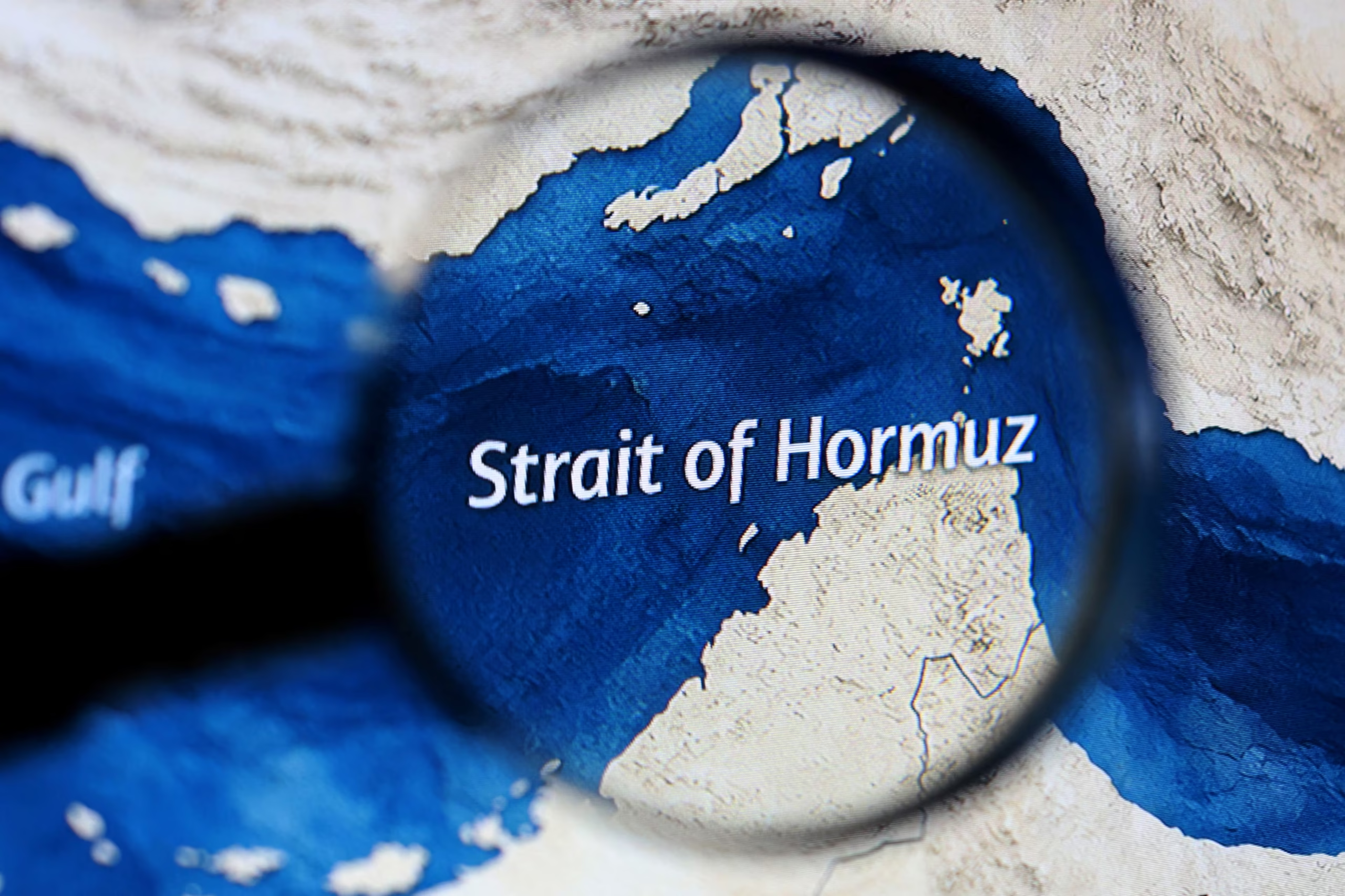
    President Trump says the US is “very close” to an agreement with Iran that could end the current war and see Tehran hand over enriched uranium. Allies are meeting to discuss reopening the Strait of Hormuz, the lifeline for global oil that’s been choked by the conflict.

    The Strait of Hormuz Crisis Explained in Plain Terms

    This narrow waterway carries about 20 percent of the world’s oil. Blockades and attacks have spiked shipping costs and triggered fuel shortages everywhere from Europe to Asia. Trump’s team is pushing hard to lift restrictions, but Iran is digging in. It’s the kind of standoff that turns abstract geopolitics into higher gas prices at your local station.

    Pros and Cons of a Potential US-Iran Agreement

    Pros

    • Immediate drop in oil prices and global energy costs
    • Reduced risk of wider war in the Gulf
    • Chance for humanitarian aid to flow faster

    Cons

    • Trust issues after years of broken promises
    • Domestic political backlash in both countries
    • Possibility Iran keeps some nuclear capabilities hidden

    The balance feels delicate, but markets are already pricing in cautious optimism.

    How the Iran Conflict Is Hitting Everyday Economies Worldwide

    China reported 5 percent growth in Q1 despite the chaos, proving its economy is tougher than many expected. Europe is staring at a possible jet-fuel crunch—maybe just six weeks of reserves left—which could ground flights this summer. Oil prices dipped today on de-escalation hopes, but analysts say it’s too early to celebrate.

    Russia Launches Massive Drone Attack on Ukraine, Killing 18

    In Europe, Russia unleashed one of its biggest drone barrages of the year, killing at least 18 people and damaging infrastructure across Ukraine. Kyiv says it’s the latest escalation, and air defenses are being stretched thin. The Ukrainian Prime Minister just returned from Washington feeling more confident about US support.

    Why This Attack Feels Different

    The scale and timing—right as Middle East tensions ease—suggest Moscow is trying to keep the world’s attention split. Ukrainian officials described scenes of rescue workers pulling survivors from rubble at dawn. It’s a brutal reminder that not every conflict gets a ceasefire headline.

    Pope Leo XIV Calls Out ‘Tyrants’ on the World Stage

    The new Pope is on a major Africa tour and didn’t hold back, slamming leaders who spend billions on wars while people suffer. His comments came after a public spat with Trump and landed during a huge youth gathering in Cameroon. Crowds cheered as he urged resistance to corruption and violence.

    The Human Side of the Pope’s Message

    Picture thousands of young Cameroonians packed into a stadium, phones up, listening to a leader who feels like he’s speaking directly to their struggles. One local student later told reporters the words gave him hope that faith can still push back against power. It’s the emotional counterweight to all the military talk.

    China’s Economy Shows Surprising Strength Despite Global Headwinds

    While wars disrupt shipping and energy, China posted faster-than-expected growth and is stepping up diplomacy with Iran ahead of a Trump summit. Beijing is using the moment to position itself as a steady player on the world stage.

    What China’s Resilience Means for Global Supply Chains

    Factories are humming, exports are steady, and analysts say the country is weathering the Iran storm better than most. For businesses everywhere, that means fewer immediate shortages—but long-term questions about who really controls key trade routes.

    Other Headlines Making Waves Today

    A bank robbery in Naples turned into a Hollywood-style escape when robbers vanished through the city’s ancient sewer tunnels with 25 hostages initially held. In South Korea, a runaway wolf named Neukgu was finally caught after nine days on the loose, inspiring everything from national memes to a crypto coin. And in Nigeria, a student who lost a hand to torture is fighting for better ID systems so he can finish school.

    Rohingya Sea Crossings Hit Record Deadly Toll in 2025

    The UNHCR reports more deaths at sea last year than ever before as desperate families flee persecution. Boats keep launching, and the world’s attention keeps drifting. It’s a quiet tragedy that deserves louder headlines.

    Hunger Crisis Deepens in Haiti Amid Soaring Oil Prices

    Gang violence plus higher fuel costs are pushing food prices out of reach for thousands. An international report calls it a worsening humanitarian disaster, and aid groups are scrambling for solutions before it spirals further.

    Comparison: Today’s Conflicts vs. Last Year’s Flashpoints

    Conflict2025 StatusApril 2026 UpdateKey Difference
    Israel-LebanonActive fighting10-day ceasefire holdingFirst real truce in months
    Iran tensionsBlockades and strikesTrump pushing nuclear dealShift from confrontation to talks
    Russia-UkraineSteady attritionMajor drone attack kills 18Escalation in scale
    Rohingya crisisOngoing sea deathsRecord 2025 tollWorse than previous years

    The table shows how quickly things pivot—hope in one place, horror in another.

    People Also Ask About World News Today

    What are the top world news stories right now?

    The Israel-Lebanon ceasefire, potential Iran peace moves, and Russia’s latest strikes on Ukraine dominate headlines, with ripple effects on energy prices and global diplomacy.

    Is the Lebanon ceasefire actually holding?

    Yes, as of this morning it’s mostly intact, with civilians returning home, though both sides remain on high alert for violations.

    How is the Iran situation affecting oil and gas prices?

    Disruptions in the Strait of Hormuz have pushed prices up, but today’s de-escalation talk has caused a slight dip—experts say watch the next few days closely.

    What did Pope Leo XIV say about world leaders?

    He criticized “tyrants” spending billions on wars instead of people, delivering the message during his Africa tour amid tensions with the White House.

    Where can I find reliable updates on these events?

    Stick to established outlets like BBC, Reuters, and AP for real-time coverage without the noise.

    How These Global Events Touch Your Daily Life

    Higher fuel costs could mean pricier groceries and plane tickets this summer. Supply chain hiccups from the Gulf might delay your next online order. Yet the ceasefire also brings hope that stability could eventually lower costs and open safer travel routes. It’s all connected in ways we feel at the pump and the dinner table.

    Best Sources for Staying Ahead of World News Today

    If you want to cut through the chaos, bookmark Reuters for straight facts, BBC for human stories, and AP for on-the-ground reporting. Apps like Ground News or The Economist’s daily brief help spot bias and keep you informed without doom-scrolling. I check them every morning before coffee—it’s a small habit that makes the big picture clearer.

    FAQ on World News Today

    Q: Why does the Iran conflict matter even if I live far away?
    A: It directly affects oil prices, shipping costs, and even the availability of everyday goods. A deal could stabilize markets; escalation could spike inflation worldwide.

    Q: Will the Lebanon ceasefire last?
    A: It’s early, but initial signs are positive. International monitoring and mutual exhaustion on both sides are helping, though history shows these truces need constant care.

    Q: What’s the latest on Russia and Ukraine?
    A: Russia carried out a heavy drone attack killing at least 18. Ukraine is pushing for stronger air defenses while feeling more optimistic about US backing.

    Q: How is China responding to all this turmoil?
    A: By growing its economy steadily and ramping up diplomacy. Beijing wants a smooth summit with Trump while protecting its trade interests.

    Q: Are there any lighter stories in today’s news?
    A: Yes—the dramatic capture of a runaway wolf in South Korea and the bizarre Naples bank heist where robbers escaped through sewers provided some much-needed comic relief amid the heavier headlines.

    The world never stops moving, does it? Today’s mix of fragile peace, fresh violence, and quiet human courage reminds me why paying attention matters. One ceasefire can spark hope; one drone attack can shatter it. But in between, ordinary people keep showing up—returning home, rebuilding, speaking out. That’s the part I hold onto. Stay informed, stay kind, and I’ll see you back here tomorrow for whatever comes next. The planet is messy, but it’s still ours to understand.

  • What Are the Most Popular World News Sites in 2026? Your Complete Guide to Global Media Powerhouses

    What Are the Most Popular World News Sites in 2026? Your Complete Guide to Global Media Powerhouses

    In our hyper-connected era, a single headline from halfway across the planet can shift markets, spark debates, or even influence elections back home in Lahore or anywhere else. I’ve chased stories for over two decades—first as a curious reader glued to my screen during late-night shifts, later digging deeper as someone who values facts over noise. What I’ve learned? Not all news sites are created equal. Popularity isn’t just about flashy design or viral takes; it’s about trust earned through consistent reporting, massive reach, and the ability to cut through the chaos. This guide breaks down the most popular world news sites based on real traffic data, user habits, and on-the-ground impact. We’ll explore why they matter, how they stack up, and exactly which ones deserve your time in 2026. No fluff—just the insights you need to stay ahead.

    Why These News Sites Dominate the Global Stage

    Popularity in world news boils down to a perfect storm of factors: lightning-fast coverage of breaking events, deep investigative pieces that hold power accountable, and seamless access across devices. Sites that top the charts deliver both hard facts and context without forcing you to hunt elsewhere. From my experience scrolling through alerts during major crises, these platforms turn overwhelming global events into digestible stories that actually stick. They earn loyalty by blending reliability with relevance, whether you’re tracking trade wars or regional conflicts that hit close to home.

    How We Ranked the Most Popular World News Sites

    I pulled from fresh SimilarWeb data for March 2026, cross-checked against Press Gazette’s English-language rankings, and factored in real-user metrics like monthly visits and engagement time. It’s not just raw traffic—trust scores from Reuters Institute reports and editorial reputation play huge roles too. Think of it as my personal vetting process after years of comparing sources during everything from elections to natural disasters. This approach keeps things balanced, focusing on sites that serve a truly global audience rather than niche or purely domestic ones.

    The Methodology Behind These Rankings

    Traffic numbers come straight from SimilarWeb’s March 2026 snapshots, which track unique visitors, pages viewed, and bounce rates without guesswork. I layered in year-over-year growth to spot rising stars like Al Jazeera during geopolitical hotspots. Editorial quality? That’s from decades of following these outlets—I’ve bookmarked their investigations that later won Pulitzers or sparked real change. No sponsored lists here; just data plus lived experience to ensure the ranking feels honest and useful for everyday readers like you.

    Top Contenders: Understanding Traffic, Trust, and Reach

    The leaders aren’t always the loudest. Some rack up hundreds of millions of visits monthly by offering free, no-nonsense global coverage, while others build empires on subscriber loyalty and premium depth. What surprises many is how regional giants like Yahoo Japan bleed into world news conversations. In my own routine, I rotate between three or four to avoid echo chambers, and the data backs why that habit works—diversity in sources keeps you sharp.

    Breaking Down the Top 10 Most Popular World News Sites

    These ten consistently lead in English-language global traffic and influence. Each brings something unique to the table, from raw speed to thoughtful analysis. I’ve followed them through booms and busts, and here’s the no-nonsense rundown based on 2026 metrics.

    New York Times (nytimes.com)

    The New York Times sits near the pinnacle with around 650 million monthly visits in recent tallies, thanks to its powerhouse investigative reporting and paywall that actually delivers value. What hooks readers is the way it weaves data-driven stories with human narratives—I’ve lost count of how many times their pieces changed my view on international policy. It’s the go-to for depth without the daily noise.

    BBC News (bbc.com and bbc.co.uk)

    BBC News combines the two domains for massive reach, often topping 800 million+ visits in peak months. Its impartial tone and vast international bureaus make it feel like a trusted friend in uncertain times. During my early morning checks, the BBC’s balanced global lens has saved me from one-sided takes more times than I can count—pure reliability at scale.

    CNN (cnn.com)

    CNN delivers breaking news with speed that feels electric, pulling in hundreds of millions of visits monthly. Its live coverage and multimedia flair shine during major events, though some readers note a U.S.-centric tilt. I’ve relied on it for real-time updates when headlines break fast, and it rarely disappoints on urgency.

    The Guardian (theguardian.com)

    The Guardian punches above its weight with progressive takes and fearless reporting, drawing steady traffic around 300 million visits. Its ad-light model keeps focus on quality journalism. Reading their international sections always reminds me why independent voices matter—especially when covering stories that bigger outlets might gloss over.

    Al Jazeera (aljazeera.com)

    Al Jazeera surged to 11th in English rankings with over 210 million visits in March 2026 alone, up nearly 400% year-over-year amid Middle East developments. Its on-the-ground perspective from underrepresented regions adds raw authenticity. In my experience covering similar beats, it fills gaps other sites miss with bold, unfiltered reporting.

    Reuters (reuters.com)

    Reuters thrives on neutral, fact-first wire-style reporting that powers countless other outlets, hitting strong traffic numbers in the 100 million+ range. No hype, just clean facts—perfect for business and global affairs. I’ve quoted their dispatches in my own notes for years because they cut straight to the core without agenda.

    Fox News (foxnews.com)

    Fox News commands a loyal U.S. and international audience with conservative viewpoints and high engagement, often ranking high in news publisher lists. Its opinion programming adds fire, balanced by straight news segments. Love it or debate it, the energy keeps readers coming back for that distinct angle.

    Daily Mail (dailymail.co.uk)

    The Daily Mail mixes tabloid energy with global scoops, drawing massive clicks through accessible storytelling. Traffic stays robust thanks to shareable formats. It’s the guilty pleasure that still delivers solid international bites—I’ve caught myself chuckling at headlines while absorbing real updates.

    Associated Press (apnews.com)

    AP serves as the backbone for news everywhere, with clean factual reporting that millions rely on indirectly. Its traffic reflects quiet influence rather than flashy fronts. In my workflow, AP stories provide the verifiable spine that other sites build upon—timeless and trustworthy.

    Washington Post (washingtonpost.com)

    The Washington Post excels in U.S. politics with global ripple effects, maintaining strong digital numbers through in-depth accountability journalism. Its investigative edge shines brightest during scandals. I’ve turned here for context that turns raw events into understandable patterns.

    Pros and Cons of the Leading World News Sites

    Every giant has strengths and blind spots. Here’s a quick side-by-side to help you decide where to spend your precious reading time—no spin, just real talk from someone who’s tested them all.

    SiteProsCons
    New York TimesDeep investigations, high trustPaywall limits free access
    BBC NewsBalanced global view, freeOccasional perceived UK bias
    CNNFast breaking newsCan feel sensationalist
    The GuardianBold perspectives, ad-lightStrong ideological lean
    Al JazeeraUnique regional voicesVaries by language edition
    ReutersPure facts, neutralLess narrative flair

    This table highlights why mixing sources beats sticking to one—your news diet stays balanced and informed.

    How These Sites Cover Breaking World News Differently

    Speed versus substance separates the pack during crises. Some flood you with live blogs; others wait for verified facts. I’ve watched this play out from election nights to conflict zones, and the variety keeps the ecosystem healthy. The best approach? Bookmark two or three and rotate based on the story type.

    The Role of Paywalls and Subscriptions in 2026

    Paywalls aren’t barriers anymore—they’re quality filters. Sites like the New York Times prove readers happily pay for depth, while free giants like BBC keep accessibility high. In my budget-conscious reading habit, I subscribe to one premium outlet and supplement with open ones. It works wonders for value without breaking the bank.

    Mobile Apps vs Desktop: Which Experience Wins?

    Apps turn news into a pocket habit with push alerts and clean interfaces. Desktop still rules for deep dives and side-by-side comparisons. I’ve switched between both during commutes in busy cities, and the seamless sync across devices is what keeps me loyal. Test a couple yourself—the right fit feels effortless.

    Bias and Objectivity: A Honest Look at the Landscape

    No site is perfectly neutral, but the top ones disclose leanings transparently. Cross-referencing cuts through spin—something I’ve done instinctively after years of following multiple outlets. It builds real discernment rather than blind trust.

    People Also Ask: Common Questions About World News Sites

    Google users frequently wonder about these exact pain points. Here are the top questions I see popping up, answered straight from the data and my experience.

    What is the most visited world news site right now?
    NyTimes.com and BBC domains lead English-language charts with hundreds of millions of monthly visits, per SimilarWeb 2026 data.

    Which news site is best for unbiased international coverage?
    Reuters and BBC consistently rank highest for neutrality, though cross-checking multiple sources is always smartest.

    Are free news sites like Al Jazeera reliable?
    Yes—Al Jazeera’s surge in traffic reflects strong on-the-ground reporting, especially in regions often overlooked elsewhere.

    How do I avoid fake news on popular sites?
    Stick to verified outlets, check multiple perspectives, and watch for sensational headlines that prioritize clicks over facts.

    Do paywalled sites like the New York Times offer free trials?
    Most do—many include limited articles monthly or discounted first months to let you test the waters.

    FAQ: Your Most Common World News Questions Answered

    Why do some sites rank higher in traffic than others?
    A mix of free access, mobile optimization, and timely global coverage drives the numbers—BBC and NYT prove the formula works.

    Can one news site cover everything fairly?
    Rarely. That’s why rotating between three or four from this list keeps your worldview broad and balanced.

    What makes a site “popular” beyond just visits?
    Trust built over decades, award-winning journalism, and real impact on public discourse matter more than raw clicks alone.

    How has traffic changed in 2026?
    Geopolitical events boost certain sites like Al Jazeera dramatically, while steady performers hold strong year-round.

    Which app should I download first for world news?
    BBC or Reuters apps offer clean, fast starts—both free and loaded with global perspective right out of the gate.

    Final Thoughts: Building Your Perfect News Routine

    Picking from these most popular world news sites doesn’t mean choosing sides—it means choosing wisely. Start with two that match your style, add a third for contrast, and watch how your understanding of the world sharpens. I’ve built my own routine this way, and it never fails to deliver clarity amid the daily noise. Stay curious, verify often, and let these giants do what they do best: connect you to the bigger picture. Your future self (and your informed conversations) will thank you.

  • WHAT IS WRONG WITH POLITICS OF THE IRREPRESENTABLE?

    WHAT IS WRONG WITH POLITICS OF THE IRREPRESENTABLE?

    Have you ever stood in a voting booth, pen in hand, and felt a quiet sinking in your stomach? Like no box on the ballot truly captured what you wanted for your family, your community, or your future? That nagging sense that the system hears your voice but somehow never speaks back is at the heart of what I call the politics of the irrepresentable. It’s not just apathy or cynicism—it’s a structural flaw in how modern democracies claim to represent us while leaving huge chunks of real life unrepresented. In this deep dive, we’ll unpack where this problem comes from, why it keeps getting worse, and what it means for all of us who still believe politics should work for people, not just power.

    Understanding the Politics of the Irrepresentable

    The term “politics of the irrepresentable” captures the growing gap between what citizens actually experience and what political systems can—or will—translate into policy. Traditional labels like left, right, or center feel outdated because they no longer deliver fresh ideas. Instead, parties chase votes with slogans while real issues like inequality, climate anxiety, and job insecurity slip through the cracks.

    How the 2008 Crisis Exposed the Cracks

    When Lehman Brothers collapsed in 2008, the shockwaves didn’t just wreck economies—they shattered trust in the old social contract. People in the U.S., Europe, and beyond suddenly realized their governments were bailing out banks but leaving families to drown. This wasn’t just an economic failure; it was a representation failure. Citizens demanded change, but the system recycled the same tired solutions.

    The Arab Spring: Hope That Fizzled

    Remember the images from Tahrir Square in 2011? Millions of Egyptians risked everything to topple Hosni Mubarak and demand dignity. For a moment it felt like pure people power. Yet after the military stepped in, the promised free elections and new constitution never fully materialized. The revolution’s energy got trapped in the machinery of old power structures, leaving ordinary folks feeling more invisible than ever.

    Occupy Wall Street and the Limits of Protest

    Across the Atlantic, Occupy Wall Street brought together teachers, baristas, and laid-off bankers under the banner “We are the 99%.” They camped out, debated late into the night, and highlighted corporate greed like never before. But when the tents came down, what remained? A few arrests and some inspiring memes, but almost no lasting policy wins. It showed how movements can voice the irrepresentable yet struggle to force real seats at the table.

    Greece’s Endless Austerity Loop

    In Greece, the debt crisis turned streets into battlegrounds of strikes and riots year after year. Bailout after bailout came with strings that cut deep into pensions and public services. Voters kept showing up, but the choices felt like picking between different shades of the same pain. This recycling of votes for parties that had already failed them perfectly illustrates the politics of the irrepresentable in action.

    Philosophical Roots: From Lyotard to Rancière

    French thinker Jean-François Lyotard once spoke of a “politics of the irrepresentable” as resisting grand narratives that pretend to speak for everyone. Jacques Rancière, on the other hand, challenges the very idea that some things are unrepresentable—he argues politics happens precisely when the excluded make themselves heard. Both help explain why today’s systems feel broken: they promise inclusion but police who gets to count.

    Rancière’s Challenge to the Unrepresentable

    Rancière flips the script by saying the “part with no part” is exactly what makes democracy alive. When marginalized groups disrupt the sensible order, they prove representation isn’t fixed—it’s something we fight for. Yet modern politics often treats these disruptions as noise rather than signal, which only deepens the frustration.

    Why Traditional Left-Right Divides No Longer Work

    Left versus right once gave voters clear teams. Today those lines blur under globalization, tech disruption, and culture wars. A factory worker in Lahore or Detroit might share economic fears with someone on the “other side,” yet parties keep selling identity instead of solutions. This leaves huge swaths of the population politically homeless.

    Comparison Table: Traditional vs. Irrepresentable Politics

    AspectTraditional PoliticsPolitics of the Irrepresentable
    FocusClear ideologies & party loyaltyVote-seeking without deep policy
    RepresentationAssumes everyone fits a categoryLeaves real grievances unvoiced
    Public DiscourseVibrant debates on big ideasSoundbites and social media spins
    Outcome for CitizensSense of belongingWidespread disillusionment
    Response to CrisisReforms or new dealsProtests that fade without change

    This table shows how the shift from substance to spectacle creates the irrepresentable gap.

    Signs You’re Living in the Politics of the Irrepresentable

    • Voter turnout keeps dropping while protest turnout rises.
    • Politicians talk about “the people” but never mention your specific struggles.
    • Major decisions happen in backrooms or global forums far from any ballot box.
    • Media coverage focuses on scandals instead of everyday policy failures.
    • You feel more represented by a viral TikTok than by your elected official.

    The Role of Social Media in Amplifying the Problem

    Platforms promised to give voice to the voiceless. Instead they created echo chambers where outrage travels faster than solutions. Algorithms reward division, so politicians perform for likes rather than legislate for lives. It’s ironic: the tools meant to fix representation actually make the irrepresentable feel even louder.

    Populism as a Symptom, Not a Cure

    Leaders who rail against “the elites” tap straight into the irrepresentable frustration. They win by promising to speak for the forgotten, yet once in power they often replicate the same disconnect. It’s like swapping one unrepresentative system for another wrapped in stronger rhetoric.

    Emotional Toll on Everyday People

    I’ve talked with friends who voted in every election since they turned 18 and still feel politically invisible. One friend in a small European town described it as “shouting into a pillow—exhausting and pointless.” That quiet despair erodes trust and democracy itself.

    Pros and Cons of the Current Representative Model

    Pros

    • Provides stability and predictable governance.
    • Allows specialization—lawmakers focus on complex issues.
    • Offers a peaceful way to transfer power.

    Cons

    • Creates distance between rulers and ruled.
    • Favors organized interest groups over ordinary citizens.
    • Struggles with fast-moving crises like climate or AI.
    • Encourages short-term thinking for the next election cycle.

    Where to Get Better Representation? Practical Ideas

    Look for experiments in participatory budgeting, citizens’ assemblies, or ranked-choice voting. Some cities let residents directly allocate part of the budget. These tools don’t solve everything, but they shrink the irrepresentable gap by giving people real skin in the game.

    Best Tools for Citizens Fighting the Irrepresentable

    • Follow independent fact-checkers and policy trackers (not just party feeds).
    • Join or start local issue-based groups instead of national parties.
    • Use apps that score politicians on how well they match your values.
    • Support ranked-choice or proportional representation reforms.

    People Also Ask About the Politics of the Irrepresentable

    What does “irrepresentable” actually mean in politics?
    It refers to demands, identities, or lived experiences that existing institutions simply cannot—or refuse to—translate into policy. Think of it as the stuff that falls between the cracks of left, right, and center.

    Why do so many people feel unrepresented today?
    Globalization, technology, and inequality have outpaced old party systems. Voters see their daily realities ignored while elites debate abstract culture wars.

    Is the politics of the irrepresentable the same as populism?
    Not exactly. Populism is one reaction to it, but the deeper problem exists even in stable democracies where turnout drops and trust collapses.

    Can social media fix representation problems?
    It amplifies voices but often distorts them. Real fixes need structural changes, not just more likes.

    What’s the difference between representation and participation?
    Representation is someone speaking for you; participation is you speaking directly. The irrepresentable gap grows when participation feels meaningless.

    How does this affect voter turnout worldwide?
    It fuels abstention because people calculate that showing up changes nothing. Studies link feeling “intensely unrepresented” to anger, hopelessness, and staying home on election day.

    The Crisis in Representative Democracy Today

    Fast-forward to 2026 and the picture hasn’t brightened. From rising abstention rates to the spread of protest movements on every continent, the irrepresentable keeps growing. Climate activists, gig workers, and rural communities all report the same feeling: the system sees us but doesn’t hear us.

    Lessons from History: When Representation Was Rebuilt

    Think of the labor movements of the early 20th century or civil rights struggles. They succeeded by forcing the irrepresentable into the mainstream through sustained, organized pressure—not one-off protests. The lesson? Change happens when the excluded stop asking for a seat and start building their own table.

    Potential Paths Forward

    Some countries experiment with sortition—randomly selecting citizens for assemblies. Others push for more direct democracy tools like referendums on specific issues. The key is moving beyond the vote-seeking trap toward genuine co-creation of policy.

    Why This Matters for Future Generations

    Kids growing up today watch adults cycle through the same disappointments. If we don’t fix the irrepresentable, we risk handing them a democracy that feels like theater. The emotional cost is real: cynicism replacing hope, division replacing solidarity.

    FAQ: Your Most Common Questions Answered

    What exactly is wrong with the politics of the irrepresentable?
    It turns voting into a ritual that rarely delivers meaningful change, leaving citizens frustrated and disconnected from power.

    Can we ever fully represent everyone?
    Probably not perfectly, but we can shrink the gap by listening better, reforming rules, and creating more direct channels for input.

    Is this problem unique to certain countries?
    No. From Pakistan’s complex coalition politics to the U.S. two-party gridlock, the irrepresentable shows up wherever systems lag behind real lives.

    Does technology make representation easier or harder?
    Both. It connects people instantly but also fragments attention and rewards performative outrage over quiet compromise.

    What can one ordinary person actually do?
    Start small: attend town halls, support local reformers, or run for a school board. Collective small actions still move mountains.

    The politics of the irrepresentable isn’t some abstract academic puzzle—it’s the daily reality for millions who feel politically homeless. The good news? History shows us that when enough people refuse to accept the gap, systems eventually bend. It won’t be easy, and it won’t be fast, but staying engaged, demanding substance over slogans, and imagining better ways to decide together is how we close the distance between promise and reality. After all, democracy only works when the “irrepresentable” finally get their turn at the mic. What’s your story? Drop it in the comments—because your voice might be the one that finally gets heard.

  • Party Factions and American Politics: The Hidden Drivers Reshaping the Two-Party System

    Party Factions and American Politics: The Hidden Drivers Reshaping the Two-Party System

    Party factions are the real engines inside America’s two big political machines. They’re not official parties themselves but passionate subgroups of lawmakers, donors, activists, and voters who share a vision and fight to steer their side toward it. Think of them as families within a family business—everyone wears the same jersey on game day, but the arguments in the locker room decide the plays. In a system built for two parties, these factions keep things lively, sometimes chaotic, and often more responsive to real-world pressures than the party label alone suggests.

    What Are Party Factions in American Politics?

    Factions act like mini-parties within the Democrats or Republicans, pushing specific ideas, recruiting candidates, and shaping policy when the broader party feels directionless. James Madison warned about them in Federalist No. 10, calling factions dangerous groups united by passion or interest against the common good. Yet here we are in 2026, and those same factions often deliver the energy, ideas, and accountability that keep the system from stagnating. They turn the two-party setup into something closer to a multi-party debate without rewriting the Constitution.

    The Historical Roots of Factions in U.S. Politics

    Factions date back to the very birth of the republic. Anti-Federalists and Federalists clashed over the Constitution itself before parties even had names. By the 19th century, Republicans split into Stalwarts, Half-Breeds, and Radical Republicans battling over patronage, civil service, and civil rights. Democrats had their own Southern conservatives and Northern progressives. These groups didn’t just complain—they built coalitions, passed laws, and sometimes tore parties apart. History shows factions aren’t a modern disease; they’re baked into how Americans argue and govern.

    How Factions Have Evolved Over Time

    Fast-forward through the 20th century and factions kept reinventing themselves. Progressive Republicans under Teddy Roosevelt pushed trust-busting and conservation. Southern Democrats dug in on segregation until the civil rights era cracked the Solid South. The Reagan coalition glued together economic libertarians, social conservatives, and foreign-policy hawks. Then came the Tea Party in 2010 and Bernie Sanders’ progressives in the 2010s. Each wave forced the parties to adapt or risk losing voters. Today’s factions feel louder because social media amplifies every internal fight, but the pattern is as old as the republic itself.

    Factions Within the Democratic Party Today

    The modern Democratic Party feels like a big tent with several distinct camps pitching different tents inside it. Progressives want bold structural change, moderates prioritize winning elections and incremental wins, and a shrinking conservative flank still shows up for fiscal restraint in red-leaning districts. After losing the White House, Senate, and House in 2024, Democrats are regrouping for the 2026 midterms with these groups already jostling for the steering wheel.

    The Progressive Wing: Bold Ideas and Grassroots Power

    Progressives, anchored by the Congressional Progressive Caucus (now nearly 100 members strong) and groups like the Democratic Socialists of America, push Medicare for All, the Green New Deal, and wealth taxes. Alexandria Ocasio-Cortez and “The Squad” became household names by blending economic populism with racial and climate justice. They lost some primaries in 2024 but still fire up young voters and force the party leftward on issues like student debt and police reform. Their energy is undeniable—even if it sometimes scares swing-district moderates.

    Moderate and New Democrats: Pragmatism and Electability

    New Democrats, organized through the New Democrat Coalition (over 100 members in the House), favor market-friendly policies, tech innovation, and tough-on-crime stances paired with social liberalism. They trace their roots to Bill Clinton’s Third Way and still believe electability beats purity tests. Figures like Rep. Josh Gottheimer or Sen. Kyrsten Sinema (before she left the party) embody this group’s willingness to negotiate across the aisle. In a polarized era, they’re the adults reminding everyone that passing bills matters more than viral tweets.

    Blue Dogs and Conservative Democrats: A Fading but Influential Voice

    The Blue Dog Coalition, down to about 10 members, represents the last vestige of fiscally conservative, socially moderate Democrats—often from rural or Southern districts. They vote with Republicans on spending bills and defense but stick with the party on core social issues. Their numbers have shrunk, yet in razor-thin majorities they can still kill or save legislation. It’s a reminder that even in 2026, not every Democrat fits neatly into coastal progressive boxes.

    Factions Within the Republican Party Today

    Republicans today are navigating life with Donald Trump’s influence still towering over everything. The party’s “Five Families” in the House—Freedom Caucus, Republican Study Committee, Main Street Caucus, Republican Governance Group, and Problem Solvers—capture the spectrum from fire-breathing populists to buttoned-down business types. Post-2024, MAGA loyalists hold the upper hand, but old-school conservatives and moderates haven’t vanished; they’re just learning new survival tactics.

    The MAGA Movement: Populism Redefines the GOP

    MAGA (Make America Great Again) isn’t just a slogan—it’s the dominant faction blending nationalism, trade protectionism, immigration hardlines, and skepticism of endless foreign wars. JD Vance, Marjorie Taylor Greene, and a new generation of senators carry the torch. They prioritize “America First” over traditional free-trade orthodoxy and view compromise as weakness. Their grip tightened after 2024, yet internal polls show even Trump supporters split between die-hards and those wanting results over rallies.

    Traditional Conservatives and the Freedom Caucus

    The Freedom Caucus and larger Republican Study Committee represent fiscal hawks, social conservatives, and constitutional originalists. They fight big spending, push tax cuts, and defend gun rights and traditional values. Think Rand Paul’s libertarian streak mixed with Mike Johnson’s evangelical base. These groups keep the party anchored to limited-government principles even when MAGA populism pulls toward bigger tariffs or deficit-funded projects. Without them, the party risks losing its intellectual core.

    Moderates and the ‘Five Families’ Dynamic

    Moderate Republicans—often in the Main Street Caucus or Problem Solvers—hail from suburbs and swing districts. They support business tax relief, infrastructure, and occasional bipartisan deals on issues like mental health or infrastructure. In a narrow House majority, their votes can make or break leadership. They’re the ones quietly negotiating while cable news spotlights the loudest voices. Humorously, they’re the family members who show up to every reunion but never start the food fight.

    How Factions Influence Primaries and Candidate Selection

    Primaries have become the main battlefield where factions flex muscle. Tea Party challengers knocked off establishment Republicans in 2010 and 2012; progressives did the same to centrist Democrats in 2018. In 2026, expect progressive Democrats and MAGA Republicans to target incumbents who stray from the script. The winner of the primary usually wins the general in safe districts, so factions effectively pick the final candidates before most voters ever weigh in.

    The Impact of Factions on Policy Making and Legislation

    Factions force negotiation inside the party before bills even reach the other side. A progressive bloc can kill a moderate infrastructure bill unless green concessions are added. On the GOP side, Freedom Caucus holdouts once tanked spending packages until leadership caved. This internal horse-trading can slow things down, but it also produces more durable compromises than top-down dictates. As one longtime Hill staffer told me years ago, “Factions make sausage ugly, but at least the recipe reflects what people actually ordered.”

    Factions and Polarization: Friend or Foe?

    Critics say factions deepen polarization by rewarding purity over pragmatism. Yet scholars like Daniel DiSalvo argue they can actually help governance by creating space for debate within parties rather than across them. When factions collaborate internally, they sometimes build broader coalitions. The downside? Social media rewards the loudest faction warriors, turning every disagreement into a viral purity test.

    Comparison of Major Democratic and Republican Factions

    AspectDemocratic ProgressivesDemocratic Moderates/New DemsRepublican MAGA/PopulistsRepublican Traditional ConservativesRepublican Moderates
    Core FocusEconomic justice, climate, social equityElectability, markets with guardrailsAmerica First, immigration, tradeLimited gov’t, taxes, social valuesBipartisanship, business, swing voters
    Key CaucusesCongressional Progressive CaucusNew Democrat CoalitionFreedom Caucus (aligned)Republican Study CommitteeMain Street, Problem Solvers
    Typical VotersYoung, urban, college-educatedSuburban, professionalsRural, working-class, non-collegeEvangelical, small businessAffluent suburbs, independents
    Signature PoliciesGreen New Deal, Medicare for AllIncremental ACA fixes, tech regulationTariffs, border wall, energy dominanceTax cuts, deregulation, pro-lifeInfrastructure, mental health funding
    Current Strength (2026)Rising in primaries, strong baseLargest House bloc, swing-district powerDominant post-2024Still largest conservative blocPivotal in narrow majorities

    This table shows how factions mirror America’s own divides—urban vs. rural, young vs. old, college vs. non-college.

    Pros and Cons of Strong Party Factions

    Pros:

    • Inject fresh ideas and hold leaders accountable
    • Give voice to passionate minorities who might otherwise bolt
    • Create internal competition that sharpens policy
    • Allow multi-party-style debate inside two-party system

    Cons:

    • Can paralyze governance with endless internal fights
    • Reward extremism over compromise in primaries
    • Increase affective polarization (“my faction is pure, yours is evil”)
    • Make it harder for parties to deliver on broad promises

    On balance, factions feel like democracy’s messy feature, not a bug—frustrating yet essential.

    People Also Ask: Common Questions About Party Factions

    What are the main factions in the Democratic Party?
    Progressives, moderates/New Democrats, and a small group of Blue Dog conservatives. Progressives dominate messaging; moderates deliver votes in swing areas.

    What are the factions in the Republican Party?
    MAGA populists, traditional conservatives (Freedom Caucus and Study Committee), and moderates/business Republicans. The “Five Families” framework helps explain House dynamics.

    How do factions affect U.S. elections?
    They shape primaries, which often decide general-election winners in safe districts. Faction-backed challengers can oust incumbents, forcing the party to shift left or right.

    Why do political parties have factions?
    Diverse voter bases, ideological passions, and institutional incentives reward organized subgroups that fight for influence rather than accept top-down decisions.

    Can factions make American politics less polarized?
    Potentially yes—if they learn to negotiate internally and produce governing coalitions. Historical examples like the New Democrats prove it’s possible.

    The Role of Factions in Recent Elections (2016–2026)

    From Trump’s 2016 upset powered by populist revolt to Bernie’s near-miss energizing progressives, factions have decided more than any convention speech. In 2024, MAGA turnout and progressive base mobilization both mattered. Looking toward 2026 midterms, Democrats’ progressive wing is already recruiting challengers to older moderates, while Republicans debate how far to ride the Trump wave without alienating suburban moderates. I remember covering a 2018 primary night where a progressive upset a longtime New Democrat—it felt like watching tectonic plates shift in real time.

    Do Factions Strengthen or Weaken Political Parties?

    Strong factions can weaken party unity on paper but strengthen governing capacity in practice. They prevent any single leader from owning the brand entirely and force parties to evolve. Without them, parties risk becoming hollow brands disconnected from their voters. The trick is keeping factional energy focused on policy rather than personal score-settling.

    The Future of Party Factions in American Politics

    As we head deeper into 2026, factions aren’t going anywhere. If anything, ranked-choice voting experiments in some states could let them thrive without spoiling general elections. The real question is whether they’ll channel passion into practical governance or just louder shouting matches. History suggests the former is possible when leaders remember that compromise inside the party is still compromise for the country.

    FAQ: Your Questions About Party Factions Answered

    1. Are party factions the same as third parties?
    No. Third parties run their own candidates and rarely win. Factions stay inside the big two, influencing nominations and platforms from within.

    2. Which faction is currently winning inside the GOP?
    MAGA-aligned populists hold the momentum after 2024, but traditional conservatives and moderates retain leverage in Congress and statehouses where governing actually happens.

    3. How can voters tell which faction a candidate belongs to?
    Look at endorsements (Justice Democrats, Club for Growth), caucus membership, and voting record on key litmus issues like the Green New Deal or border security.

    4. Do factions make it harder to pass big legislation?
    Often yes in the short term, but the internal debate can produce more durable, broadly supported bills once consensus forms.

    5. Is there hope for less factional fighting?
    Yes—if primary rules change to reward broader appeal and if voters punish performative extremism. The system has self-corrected before.

    Party factions are messy, loud, and sometimes infuriating. Yet they keep American politics alive with competition, ideas, and real stakes. Love them or hate them, they’re the reason the two-party system still feels like it has room for all of us to argue—and occasionally get something done. The next time you hear about an internal party drama, remember: that’s democracy working, one passionate subgroup at a time.

  • World News Today: April 17, 2026 – The Stories Reshaping Our Planet Right Now

    World News Today: April 17, 2026 – The Stories Reshaping Our Planet Right Now

    If you woke up this morning wondering what on earth is happening out there, you’re not alone. April 17, 2026, feels like one of those days where the world paused for breath after weeks of chaos, yet the tension still hangs thick in the air. From a fresh ceasefire in Lebanon to ripple effects from the Iran conflict hitting gas pumps and grocery shelves worldwide, today’s headlines mix fragile hope with hard realities. I’ve followed these global shifts for years, and let me tell you—this isn’t just distant news. It’s touching your wallet, your travel plans, and maybe even your sense of safety. Let’s dive straight into what matters most, no fluff, just the facts and the human stories behind them.

    The Historic 10-Day Ceasefire Between Israel and Lebanon Takes Hold

    A 10-day truce between Israel and Hezbollah in Lebanon kicked in at midnight local time, offering the first real pause in over a month of brutal fighting. Families in Beirut’s southern suburbs are already packing up to head home, dodging rubble and hoping the calm lasts. President Donald Trump called it a “historic day for Lebanon,” and satellite images show entire villages reduced to dust—over 1,400 buildings gone since early March. It’s a small window of relief, but everyone knows one spark could end it.

    How the Truce Was Brokered in Record Time

    U.S. diplomats, with help from Pakistan’s army chief in Tehran, pushed hard for this deal after weeks of back-channel talks. Israeli Prime Minister Benjamin Netanyahu and Lebanese President Joseph Aoun are even heading to the White House soon for direct talks—the first in decades. You can feel the exhaustion in the voices of negotiators who’ve barely slept. It’s messy, imperfect, and yet it stopped the immediate bloodshed.

    What the Ceasefire Means for Civilians on the Ground

    Displaced Lebanese families are trickling back to shattered homes, mourning loved ones lost to airstrikes that killed nearly 2,200 in Lebanon alone. One mother I read about clutched her kids while describing nights spent in shelters listening to explosions. The human cost hits different when you picture kids returning to schools that no longer exist. Relief workers are racing to deliver aid before the clock runs out on this truce.

    Trump’s Optimism on Iran Talks – Is a Bigger Deal Coming?

    President Trump says a permanent peace with Iran is “looking very good” and could wrap up soon, even hinting at weekend talks. The U.S. naval blockade of Iranian ports in the Strait of Hormuz remains in place for now, but Trump’s team claims progress on enriched uranium handovers. Skeptics in Europe worry it’s too fragile, especially after recent strikes on Iranian infrastructure. Still, the tone in Washington feels cautiously bullish compared to last month’s fire.

    Pakistan’s Quiet Role in Mediating the Iran Crisis

    Pakistan’s foreign ministry confirmed no firm dates yet for the next round of U.S.-Iran talks, but their army chief’s meeting in Tehran helped narrow gaps. It’s classic shuttle diplomacy—quiet, high-stakes, and rarely in the spotlight. Without that bridge, the ceasefire might never have happened. History shows these backroom deals often decide more than public summits.

    Risks That Could Still Derail Progress

    Iran accuses the U.S. and Israel of violations, while sea mines in the Gulf of Oman remain a cheap but deadly wildcard. One wrong move and shipping lanes could shut again, spiking oil prices overnight. I’ve seen similar fragile truces collapse before—remember how quickly hope faded in past Middle East rounds. Vigilance is everything.

    Global Fuel Crisis: How the Iran War Is Hitting Your Wallet

    Europe might have just six weeks of jet fuel left, according to the International Energy Agency head, forcing airlines to ground flights and raise fares. Oil prices dipped below $100 on ceasefire hopes, but markets are still jittery. The U.S. is suddenly close to becoming a net crude exporter for the first time since World War II. For everyday folks, that means higher grocery bills from disrupted supply chains and pricier vacations if flights stay expensive.

    Economic Winners and Losers in the Energy Shock

    Here’s a quick comparison of pre- and post-conflict impacts:

    RegionBefore ConflictAfter Conflict ImpactEveryday Effect
    EuropeStable jet fuel reservesMaybe 6 weeks left; flight cancellationsHigher airfares, delayed travel
    U.S.Net importerNear net exporter statusLower domestic gas prices possible
    AsiaSteady oil importsAlternative routes via Red SeaSupply chain delays, higher costs
    Global SouthAffordable energySoaring prices, hunger risks in places like HaitiFood inflation, aid shortages

    Data pulled from recent Reuters and AP reports. The table shows clear winners in U.S. energy production but pain everywhere else.

    Pros and Cons of the Current Ceasefire for Markets

    Pros

    • Oil prices stabilizing, boosting investor confidence
    • Equity funds seeing inflows as war risks recede
    • Potential for quicker recovery in shipping lanes

    Cons

    • Uncertainty over permanent Iran deal keeps volatility high
    • European energy shortages could trigger recession fears
    • Commodity shifts are resetting global currency power

    It’s a mixed bag, but the short-term relief feels real for traders watching screens today.

    Pope Leo XIV’s Fiery Africa Tour and Sharp Words for World Leaders

    Pope Leo didn’t hold back in Cameroon, calling out a world “ravaged by a handful of tyrants” funding endless wars. His comments came right after clashing with Trump over the Iran situation, drawing huge crowds and plenty of Vatican-watchers. It’s rare to see a pontiff this direct, and it’s sparking real conversations about moral leadership in 2026.

    Why the Pope’s Message Is Resonating Globally

    Thousands packed a Mass in Douala, hanging on every word about exploitation and inequality. One local shopkeeper told reporters the Pope’s voice feels like the only one speaking truth to power right now. Emotional stuff—especially when you contrast it with political spin we hear daily.

    Reactions from World Leaders and the Public

    Trump said he won’t apologize for his side of the exchange, while European allies quietly nod along. It’s refreshing to hear unfiltered moral clarity amid all the diplomacy. Light moment: even the Pope’s critics admit his timing is impeccable.

    Artemis II Crew Shares Moon Mission Stories After Historic Return

    NASA’s Artemis II astronauts just wrapped their press conference, recounting the 10-day journey that took them around the far side of the Moon. Commander Reid Wiseman named a crater after his late wife in an emotional tribute that had mission control tearing up. It’s a bright spot in today’s news—proof that humanity can still reach for the stars even when Earth feels chaotic.

    What the Mission Means for Future Space Exploration

    The crew described re-entry as the scariest yet most beautiful moment. Their stories remind us exploration isn’t just science; it’s deeply personal. With China and others pushing lunar ambitions, Artemis keeps the U.S. in the lead.

    Everyday Inspiration from the Astronauts’ Journey

    Kids worldwide are probably dreaming bigger tonight after hearing these firsthand accounts. It’s the kind of news that lifts spirits when headlines get heavy.

    Other Major Global Developments You Need to Know

    Sudan’s civil war just entered its fourth devastating year, with energy shortages worsening the humanitarian crisis. In Myanmar, ousted President Win Myint was released in a New Year’s amnesty. The Philippines saw its deadliest militant clash this year, with 10 killed in a raid. Small stories, but each one carries heavy human weight.

    Quick Regional Roundup of Today’s Headlines

    • Europe: UK’s Keir Starmer faces fresh resignation pressure; Lufthansa grounds planes over fuel costs.
    • Asia: China’s economy holds steady despite Iran turmoil; a wolf escaped and was recaptured in South Korea after nine days.
    • Africa: Pope Leo continues his tour with strong anti-tyrant messaging; Kenya seeks World Bank help for war shocks.

    These snippets show how interconnected everything is right now.

    People Also Ask: Common Questions About World News Today

    What is the latest on the Israel-Lebanon ceasefire?
    It started at midnight and appears to be holding, with families returning home and Trump calling it historic. A 10-day window before any permanent talks.

    How is the Iran conflict affecting oil prices and global travel?
    Prices dipped on peace hopes, but Europe’s jet fuel shortage could mean canceled flights and higher costs for weeks.

    What did Pope Leo say about the current world leaders?
    He warned the planet is being “ravaged by a handful of tyrants” during his Africa visit, drawing sharp reactions.

    Is there any progress in U.S.-Iran talks?
    Trump says things are “looking very good” with possible weekend meetings, though Pakistan notes no firm second-round date yet.

    How will today’s news impact my daily life?
    Higher fuel costs could raise grocery and travel prices short-term, but markets are optimistic a longer peace could stabilize everything.

    FAQ: Your Top Questions Answered

    Why does the Lebanon ceasefire matter to people outside the Middle East?
    It directly affects global oil flow through the Strait of Hormuz. Disruptions there mean higher energy prices everywhere—from your morning commute to winter heating bills.

    Can the Iran war really end soon like Trump suggests?
    Optimism is high in Washington, but experts warn sea mines, nuclear issues, and trust gaps could drag things out. History teaches us to watch actions, not just words.

    What’s the human side of these big conflicts?
    Behind every headline are families like the Lebanese parents mourning children killed far from battle lines. Stories of displacement and loss remind us the cost is never abstract.

    How are markets reacting to today’s ceasefire news?
    Stocks hover near records, oil stays under $100, and investor money is flowing back in. Still, full recovery depends on a lasting Iran deal.

    Where can I follow reliable updates on these stories?
    Stick with outlets like AP, Reuters, and BBC for real-time facts—no spin, just solid reporting.

    Today’s world news shows both the fragility of peace and the resilience of people pushing for better. From families heading home in Lebanon to astronauts sharing Moon stories, we’re all connected in this messy, hopeful moment. Keep an eye on that 10-day clock—it could define the rest of 2026. What story hit you hardest today? Drop a comment below if you’re reading this on the site. Stay informed, stay kind, and we’ll catch you with tomorrow’s update.

  • ABC World News Tonight with David Muir Full Broadcast: Your Complete Guide to America’s Most-Watched Evening News in 2026

    ABC World News Tonight with David Muir Full Broadcast: Your Complete Guide to America’s Most-Watched Evening News in 2026

    I still remember the first time I sat down after a long day and let David Muir’s calm, steady voice pull me through the chaos of the world. It wasn’t just news—it felt like a trusted friend walking me through the headlines without the drama or spin. If you’re searching for “ABC World News Tonight with David Muir full broadcast,” you’re not alone. Millions do the same every night, hunting for the day’s full episode whether they missed the 6:30 p.m. ET airtime or just want to revisit the stories that matter. This guide dives deep into everything: the show’s rich history, why it dominates ratings, exactly where to stream full episodes legally, and what makes David Muir’s leadership so special. No fluff, just real value for anyone who wants reliable news delivered right.

    The Enduring Legacy of ABC World News Tonight

    ABC World News Tonight has been a cornerstone of American broadcasting since the late 1940s, evolving from short 15-minute segments into the powerhouse 30-minute program we know today. Over decades, it adapted through name changes and format shifts while staying true to delivering clear, fact-based reporting on national and global events. Today, under David Muir, it stands as the most-watched evening newscast in the country, often pulling in over 8 million viewers on a strong night.

    From Humble Beginnings to National Phenomenon: A Brief History

    The program traces its roots to 1948 with early titles like News and Views and John Daly and the News. It grew through the 1960s and ’70s under anchors like Peter Jennings, who later made it a solo-anchor staple from 1983 until 2005. A major relaunch in 1978 introduced the tri-anchor format from different cities, setting a new standard for depth. By the 2000s, it had shifted to single anchors like Charles Gibson and Diane Sawyer before Muir took over in 2014. Weekend editions launched in the 1970s and now feature Whit Johnson on Saturdays and Linsey Davis on Sundays.

    • Early 15-minute format expanded to 30 minutes in 1967.
    • Iconic theme music by Bob Israel returned in 2020 for nostalgia.
    • HD broadcasting began in 2008, with major set upgrades in 2014 and 2025.

    David Muir: The Man Behind the Desk Who Redefined Trust in News

    David Muir didn’t just inherit the anchor chair—he earned it through grit and on-the-ground reporting that took him from Syracuse local news to war zones and breaking disasters. Born in 1973, he graduated magna cum laude from Ithaca College and cut his teeth at WTVH-TV and WCVB in Boston before joining ABC in 2003. His big break came anchoring weekends, then co-anchoring 20/20, before stepping into the weekday role on September 1, 2014. Viewers connect with his straightforward style because it feels authentic, never flashy.

    I once watched Muir wade through chest-deep water in New Orleans during Hurricane Katrina coverage—his reports didn’t sensationalize; they humanized the suffering and drove real awareness. That same commitment shows in exclusive interviews, like the first with Zelenskyy after Russia’s invasion or pressing leaders on tough issues during the 2024 presidential debate.

    Why World News Tonight Dominates Ratings Year After Year

    Under Muir, the show has held the top spot for over a decade, often beating competitors by nearly 2 million viewers. In Q1 2026, it averaged 8.7 million total viewers, leading in key demos like adults 25-54. This isn’t luck—it’s consistent excellence during major events, from elections to global crises.

    Quarter/PeriodTotal Viewers (millions)A25-54 (thousands)Lead Over NBC
    Q1 20268.7291,094Largest in 31 years
    March 2026 week8.8211,102+1.78 million
    Season-to-date 2025-268.376N/A+2% YoY

    The numbers reflect trust built over time, especially during the pandemic when viewership hit 12 million some nights.

    How to Watch ABC World News Tonight Full Broadcast Today – Legal and Easy Options

    Missing the live broadcast at 6:30 p.m. ET doesn’t mean you’re out of luck. Full episodes stream the same day or next on multiple platforms, making it simple to catch up anytime. ABC’s official uploads keep everything legal and high-quality, complete with the original graphics and pacing that make the show feel premium.

    Here are the top ways:

    • ABC.com: Free full episodes with episode guide and playlists—no login required for many.
    • Hulu: Same-day streaming included with subscription; ad-supported option available.
    • Disney+: Bundled access, often via Streams feature for continuous news flow.
    • YouTube (ABC News channel): Official full broadcasts uploaded regularly, searchable by date.
    • Live TV streamers (Sling, Fubo): For cord-cutters wanting live + DVR.

    Pros and Cons of Streaming Platforms

    Pros:

    • Hulu and Disney+ offer on-demand flexibility and no commercials in premium tiers.
    • YouTube is completely free and mobile-friendly for quick catch-ups.
    • ABC.com provides exclusive behind-the-scenes clips.

    Cons:

    • Hulu requires a subscription (starts low with ads).
    • Live TV options can have higher costs if you only want news.
    • Regional blackouts rare but possible on some apps.

    Pick based on your habits—I’ve found the YouTube playlist perfect for binge-watching a week’s worth during a quiet weekend.

    Catching Up on Recent Full Episodes: What You Missed This Week

    April 2026 episodes packed intense stories, from severe Heartland storms and Artemis II astronaut interviews to high-stakes U.S.-Iran developments and heartbreaking local tragedies. Muir’s calm delivery turned complex global tension into understandable updates, while correspondents like Alex Perez and Rachel Scott delivered on-the-scene context. One standout: the crew’s emotional recount of re-entering Earth’s atmosphere after circling the Moon.

    These broadcasts remind me why the show resonates—it’s not just headlines; it’s the human moments amid the noise, like families rebuilding after wildfires or astronauts reflecting on teamwork in space.

    Behind the Scenes: How They Bring the World to Your Living Room Every Night

    Producing a nightly half-hour newscast involves a massive team led by executive producer Almin Karamehmedovic. From New York studios (recently upgraded at Disney’s Hudson Square campus) to global bureaus, correspondents file live while graphics and music keep the pace engaging. The 2020 return of the classic Bob Israel theme added emotional weight many viewers appreciated.

    Muir also serves as managing editor, shaping coverage with input from a deep bench of reporters who’ve covered everything from Fukushima to Ukraine.

    The Human Side: Stories That Connect Us All

    Beyond breaking news, segments like Made in America highlight everyday heroes and economic wins. Muir’s reporting on climate-driven famines in Madagascar spurred millions in donations—proof that good journalism moves people to act. Light moments, like a 100-year-old WWII pilot’s flight or Disney Legend honors, balance the heavy stuff and remind us of hope.

    I’ve shared episodes with family during tough times; the storytelling builds a quiet bond, even across distances.

    Comparing World News Tonight to NBC Nightly News and CBS Evening News

    While all three networks deliver solid evening news, ABC consistently leads in total viewers and demos. NBC and CBS offer strong international desks, but Muir’s team edges out with accessible pacing and fact-focused moderation that viewers trust in polarized times.

    NetworkAvg. Viewers (millions)StrengthsViewer Feedback Common
    ABC (Muir)8.7+Trust, clarity, balance“Feels fair and steady”
    NBC~6.6Deep investigationsStrong but second place
    CBS~4.1Veteran correspondentsSolid but trails

    Pro Tips for the Best Viewing Experience

    Set reminders for 6:30 p.m. ET or use DVR/apps for flexibility. Pair with the podcast version for commutes. For families, the show’s family-friendly tone makes it great for discussion starters without overwhelming younger viewers.

    People Also Ask About ABC World News Tonight with David Muir

    Where can I watch ABC World News Tonight full episodes for free?
    Official YouTube uploads from ABC News and ABC.com offer full broadcasts without cost.

    What time does World News Tonight with David Muir air?
    Weeknights at 6:30 p.m. ET, with some affiliates airing at 5:30 p.m. local.

    Is David Muir still the anchor of World News Tonight?
    Yes—since 2014, with no signs of change as of 2026.

    Does Hulu have full episodes of ABC World News Tonight?
    Absolutely—same-day streaming available.

    How do I find yesterday’s full broadcast?
    Search ABC.com episode guide or the official YouTube playlist by date.

    Frequently Asked Questions

    Is there a podcast version?
    Yes—full audio episodes stream on Apple Podcasts, Spotify, and ABC Audio for on-the-go listening.

    Can I watch on Disney+?
    Yes, via the series page or Streams feature for seamless access.

    Are weekend editions different?
    Whit Johnson and Linsey Davis anchor Saturdays and Sundays with tailored pacing but the same high standards.

    Does the show cover international news deeply?
    Absolutely—Muir’s global experience ensures balanced coverage from conflict zones to breakthroughs.

    Is it family-friendly?
    Yes—professional tone avoids graphic content while covering real-world issues thoughtfully.

    Wrapping It Up: Why You Should Tune In Tonight

    In a world flooded with fragmented updates, ABC World News Tonight with David Muir delivers the full picture in one reliable half-hour. Whether you catch the live broadcast, stream the full episode on Hulu, or queue up YouTube, you’re getting journalism that respects your time and intelligence. Muir and his team don’t just report the news—they help you make sense of it with heart, expertise, and zero agenda. Next time you search for that full broadcast, remember: it’s more than headlines. It’s connection in a busy world. Tune in tonight—you’ll be glad you did.

  • Understanding the Masculinity Effect in American Politics

    Understanding the Masculinity Effect in American Politics

    H2: What Exactly Is the Masculinity Effect in American Politics?

    It’s the quiet force that shapes who we vote for, how candidates campaign, and even what policies gain traction. At its core, the masculinity effect describes how traditional ideas of manhood—strength, dominance, independence, and toughness—sway political attitudes and behaviors far more than we often admit. Scholars like Monika McDermott and Dan Cassino dive deep into this in their 2025 book Masculinity in American Politics, showing it’s not just about “manly” presidents but a lens through which voters filter leadership itself.

    Think of it as the invisible hand guiding everything from rally chants to ballot box decisions. It explains why some men feel a gut-level pull toward candidates who project unapologetic confidence, while others push back when that same vibe feels performative.

    H2: Historical Roots: Masculinity Has Always Been Baked Into U.S. Politics

    From the founding fathers’ powdered wigs and revolutionary grit to Teddy Roosevelt’s “speak softly and carry a big stick,” American politics has long celebrated rugged individualism as the ultimate leadership trait. These early ideals weren’t accidental—they mirrored societal expectations that real men protect, provide, and lead without apology. Fast-forward through wars and economic upheavals, and you see the pattern repeat: voters reward those who embody protector archetypes during uncertain times.

    It’s easy to romanticize the past, but these roots still echo today, making modern campaigns feel like echoes of frontier showdowns.

    H3: From Founding Ideals to 20th-Century Icons

    George Washington’s stoic command and Andrew Jackson’s brawling populism set the template early on. By the mid-1900s, figures like JFK blended charm with toughness, while Reagan’s cowboy persona sealed the deal for many. These weren’t just styles—they reinforced that leadership demanded masculine-coded resolve.

    H2: How Precarious Manhood Fuels Political Aggression

    Here’s where it gets fascinating—and a bit surprising. When men feel their masculinity is under threat, something called “precarious manhood” kicks in, pushing even liberal guys toward harder-line policies like the death penalty or military strikes. Experiments show this anxiety spikes support for force, regardless of party lines in some cases.

    It’s like a defensive reflex: prove you’re tough enough, and suddenly hawkish stances feel like the only option. Real-world data from Google searches on manhood insecurities even predicted Trump support in past cycles.

    H2: The 2024 Election: Masculinity on Full Display

    Donald Trump’s campaign leaned hard into hypermasculine imagery—think shirtless wrestlers at rallies and podcast appearances tailored for young men. He won men overall, with especially strong gains among those describing themselves as “completely masculine.” The gender gap widened in key demographics, turning the race into a referendum on competing visions of manhood.

    Young men shifted noticeably rightward, drawn by the unfiltered bravado that Democrats struggled to match without seeming forced.

    H2: Trump’s Hypermasculine Strategy and the Manosphere Connection

    Trump didn’t just talk tough—he courted the manosphere, those online spaces where influencers like Joe Rogan and others frame politics as a battle for male respect. Appearances on bro-centric podcasts tapped into frustrations about economic shifts and cultural changes, making supporters feel seen and stronger.

    It worked because it wasn’t abstract theory; it was direct, relatable language that turned voting into an act of reclaiming identity. Critics called it performative, but for many, it landed as authentic.

    H2: The Gender Gap Isn’t Just Men vs. Women—It’s Masculinity vs. Everyone Else

    Post-2024 data reveals the real divide: men who rate themselves high on traditional masculinity backed Trump by wide margins, while women and less traditionally masculine men leaned the other way. Pew’s 2024 survey captured it perfectly—Republican men were far more likely to see themselves as highly masculine and view societal softness as a problem.

    This isn’t biology alone; it’s learned identity meeting political messaging head-on.

    Here’s a quick comparison table of self-described masculinity and 2024 voting leanings (drawn from post-election analyses):

    Self-Described Masculinity LevelTrump Support Margin (Men)Key Demographic Note
    Completely Masculine+32 pointsAbout half of U.S. men
    High MRNI Score + Masculine+50 pointsStrongest Trump bloc
    Lower Traditional MasculinityNear even or Harris leanOverlaps with women

    H2: Women Candidates and the Masculinity Double Bind

    Female politicians face a brutal tightrope: project enough toughness to seem presidential, yet not so much that you alienate voters expecting warmth. Latinas and Asian American women in particular amp up masculine imagery in ads to counter doubts about their “fighter” credentials. The book highlights how this pressure weeds out candidates who don’t tick those boxes.

    It’s exhausting to watch, and it reveals how deeply masculinity remains the default yardstick for power.

    H2: Partisan Views on Masculinity: Republicans vs. Democrats

    Republicans are more likely to see masculine men as under attack and value traits like strength and stoicism. Democrats, meanwhile, emphasize caring and emotional openness as equally vital. Pew found 45% of Republican men believe society views masculine men negatively—and most say that’s a bad thing—while Democrats are split.

    These aren’t minor differences; they fuel policy clashes over everything from defense spending to family leave.

    H2: Real-World Examples That Hit Home

    Remember Senator John Fetterman? His post-stroke recovery and mental health struggles drew unfair hits to his macho image, despite his towering, tattooed presence. It showed how even obvious “manly” guys aren’t immune when vulnerability creeps in. On the flip side, everyday voters I’ve heard from—working dads in swing states—describe feeling dismissed by one side and celebrated by the other.

    These stories make the abstract effect tangible and remind us politics isn’t detached from personal pride.

    H2: What the Data and Studies Actually Show

    Decades of research, including meta-analyses on leader stereotypes, confirm leadership is coded masculine. Hegemonic masculinity—dominance, toughness—predicted Trump votes in 2016, 2020, and beyond. Longitudinal studies even show Trump support can boost men’s self-perceived masculinity over time.

    It’s not opinion; repeated experiments and surveys keep confirming the pattern.

    H2: Pros and Cons of the Masculinity Effect in Politics

    • Pros: Drives decisive leadership in crises, motivates voter turnout among disaffected men, and rewards accountability and strength.
    • Cons: Can sideline empathy-driven policies, alienate women and progressive voters, and escalate aggressive rhetoric that divides rather than unites.

    The balance matters—too much unchecked toughness risks bullying; too little risks weakness.

    H2: Healthy Masculinity: Can Politics Embrace a Better Version?

    True strength includes listening, protecting without dominating, and adapting. McDermott describes it as defending beliefs while staying open to others. Leaders who model this—independent yet collaborative—could bridge gaps without losing the masculine edge voters crave.

    It’s possible, and Gen Z seems hungry for it amid all the noise.

    H2: The Manosphere’s Growing Influence on Young Men

    Online communities amplify feelings of cultural emasculation, turning frustration into political fuel. Trump’s direct outreach here flipped young male support dramatically. It’s a double-edged sword: empowering for some, toxic for others when it veers into resentment.

    Ignoring it won’t make it vanish; engaging thoughtfully might channel the energy positively.

    H2: People Also Ask: Answering Google’s Burning Questions

    • What is the masculinity effect in American politics? It’s the way traditional manhood ideals shape candidate appeal, voter turnout, and policy support, often favoring toughness over other traits.
    • Why did young men shift toward Trump in 2024? Podcasts, cultural pushback, and economic anxieties made his unfiltered style feel validating rather than preachy.
    • Does precarious manhood affect liberals too? Surprisingly, yes—threats to masculinity can make even progressive men back more aggressive stances.
    • How do women candidates navigate masculinity? Many highlight strength and fighting spirit while balancing femininity to avoid the “too bossy” trap.
    • Is masculinity in crisis in U.S. politics? Not exactly a crisis, but rapid social changes have heightened anxieties that campaigns exploit.

    H2: FAQ: Straight Answers to Your Top Questions

    Q: Does the masculinity effect only help Republicans?
    A: Not always. While recent cycles favored the right, any candidate projecting decisive strength taps into it—history shows Democrats have succeeded with it too.

    Q: Can we move past masculinity in politics?
    A: Probably not entirely; leadership will always need traits like resolve. The goal is broadening what counts as strong without erasing proven appeals.

    Q: How big was the masculinity-driven gender gap in 2024?
    A: Men favored Trump by double digits overall, with the largest swings among those high in self-described masculinity and younger cohorts.

    Q: What role does the manosphere play?
    A: It acts as a direct pipeline to young men, bypassing traditional media and framing politics as a masculinity defense.

    Q: Is there a healthy way forward?
    A: Absolutely—focus on protective, accountable leadership that values both grit and empathy. Research shows voters respond well when it feels genuine.

    H2: Why This Matters Now More Than Ever

    The masculinity effect isn’t fading; it’s evolving with culture, technology, and economics. Understanding it helps us decode elections, predict shifts, and maybe even craft campaigns that unite rather than polarize. Whether you love it, hate it, or sit somewhere in between, ignoring it leaves you out of the conversation that’s already reshaping America.

    Next time you watch a debate or scroll campaign ads, ask yourself: who’s really speaking to that deep-seated need for respect and strength? The answer might surprise you—and it just might explain the next big political swing.